
Often several of your projects have a similar structure. The Module Library lets you keep typical tasks and summaries as ready-made templates (modules), so you can add them to any project in a few clicks instead of planning them again from scratch.
Overview
The Module Library opens as a panel on the Pipeline page. In the panel you can:
- keep several libraries and switch between them;
- save tasks and summaries from your projects as modules;
- find modules by name or tag;
- add modules to your projects;
- create a new project from a whole library.
Opening the Module Library
- Go to the Pipeline page.
- Click the Module library button in the top right corner (Screen #1).
- The Module library panel opens. To close it, click the same button again or the × in the panel’s top right corner.
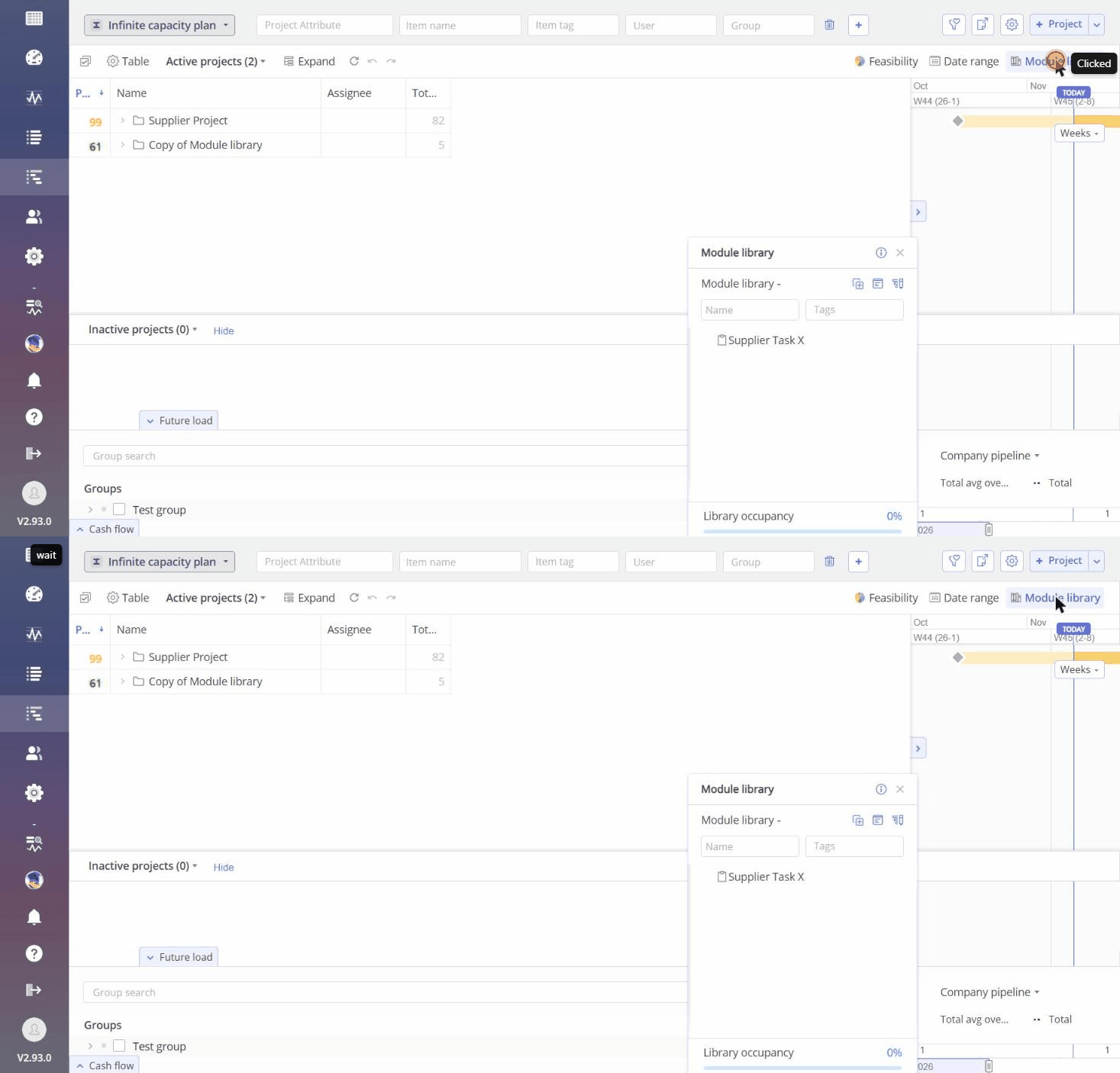
Screen #1 – Opening the Module Library
Working with Libraries
You can keep several libraries, for example one per department or type of work. The name of the selected library is shown at the top of the panel, under the panel header.
Creating a library
- In the Module library panel, click the library name to open the list of libraries.
- Click Create new.
- Enter a Module library name (required). The name must be unique.
- If needed, select a Parent group (optional).
- Click Create (Screen #2).
The new library opens in the panel right away. It is empty until you add items to it.
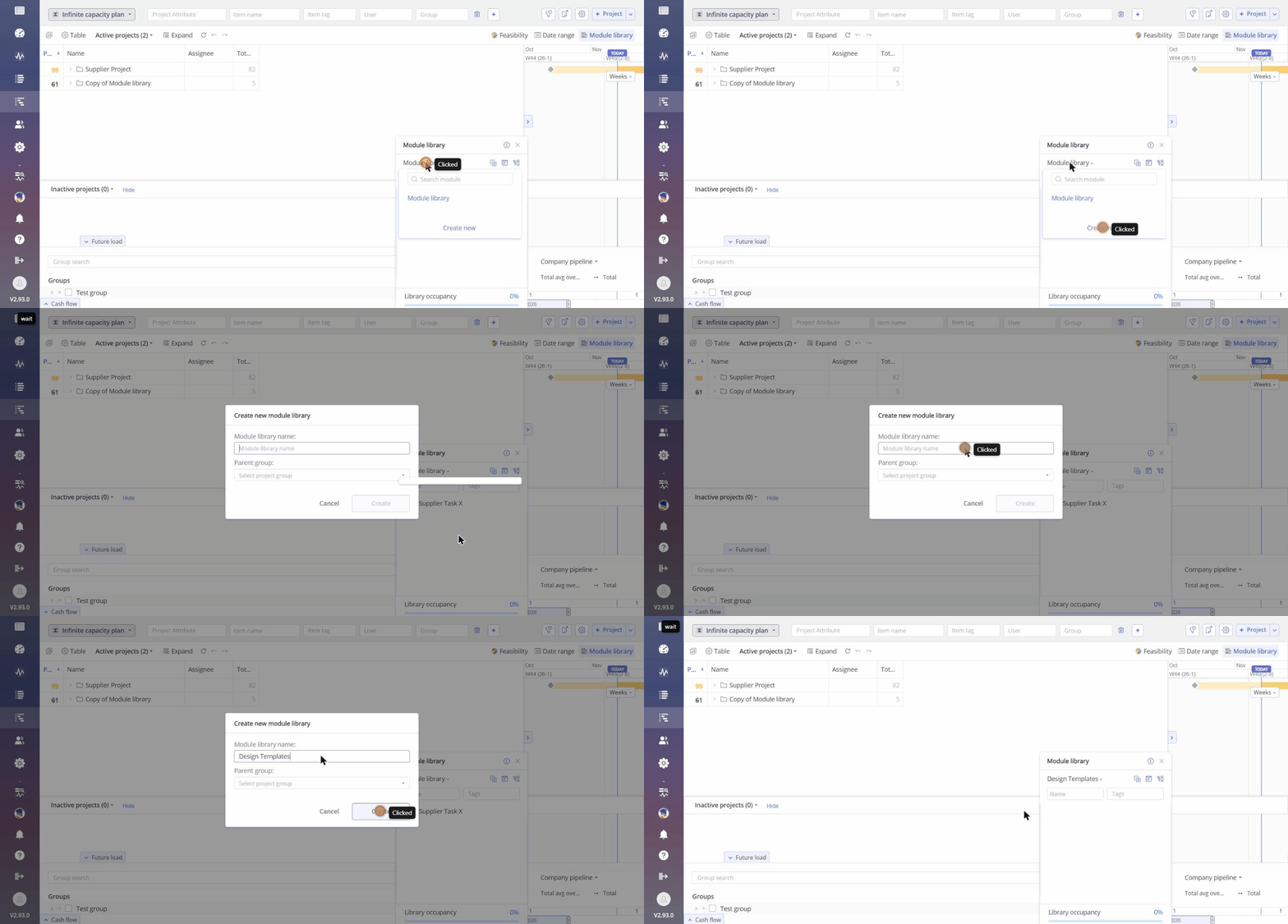
Screen #2 – Creating a library
Switching between libraries
- Click the library name in the panel.
- Select the library you need from the list (Screen #3). If you have many libraries, type part of the name in the Search module field.
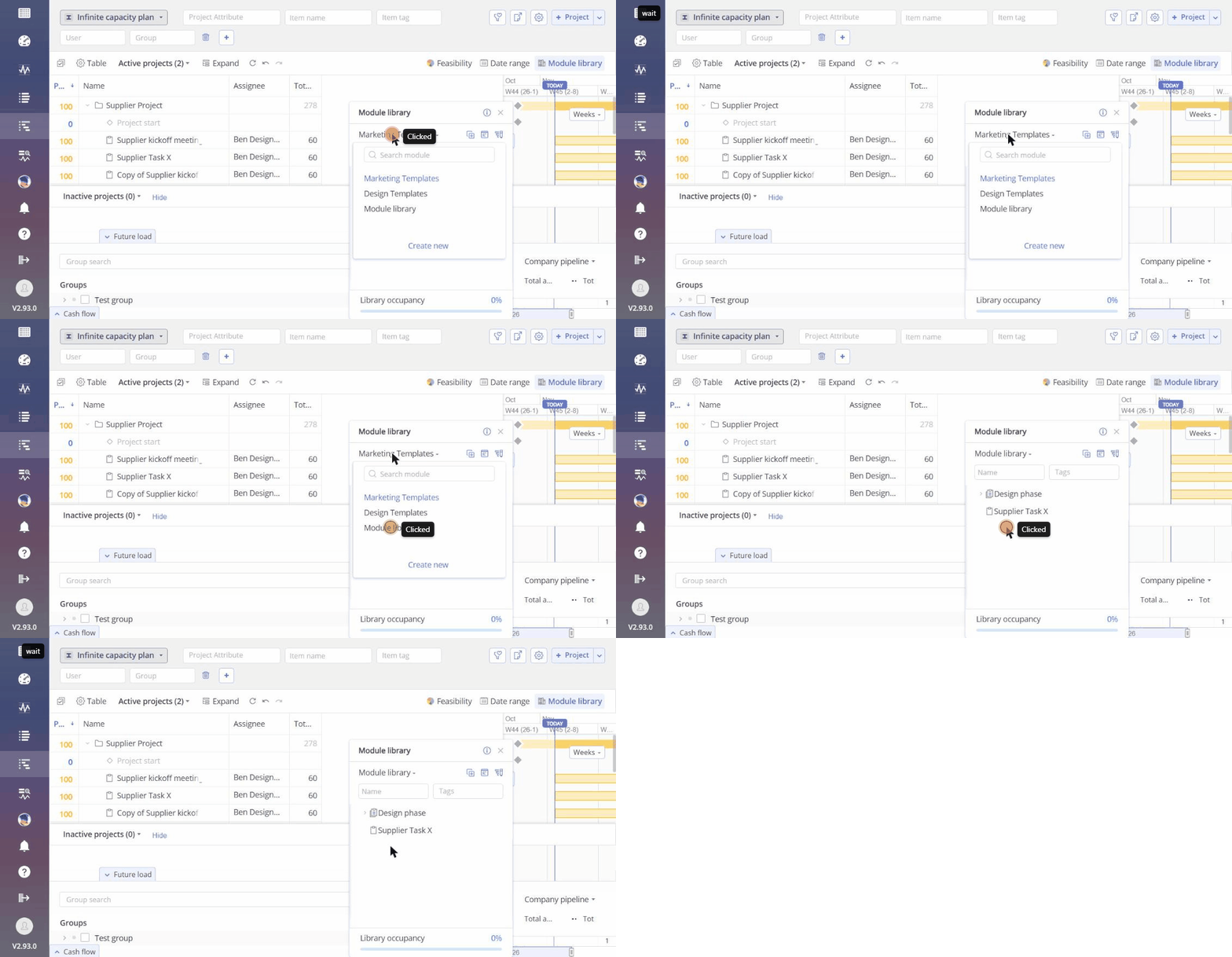
Screen #3 – Switching between libraries
Renaming a library and viewing its details
- Select the library.
- Click the Edit icon (the second icon to the right of the library name).
- The Edit module library window shows when the library was created and by whom.
- To rename the library, change the Module name and click Save (Screen #4).
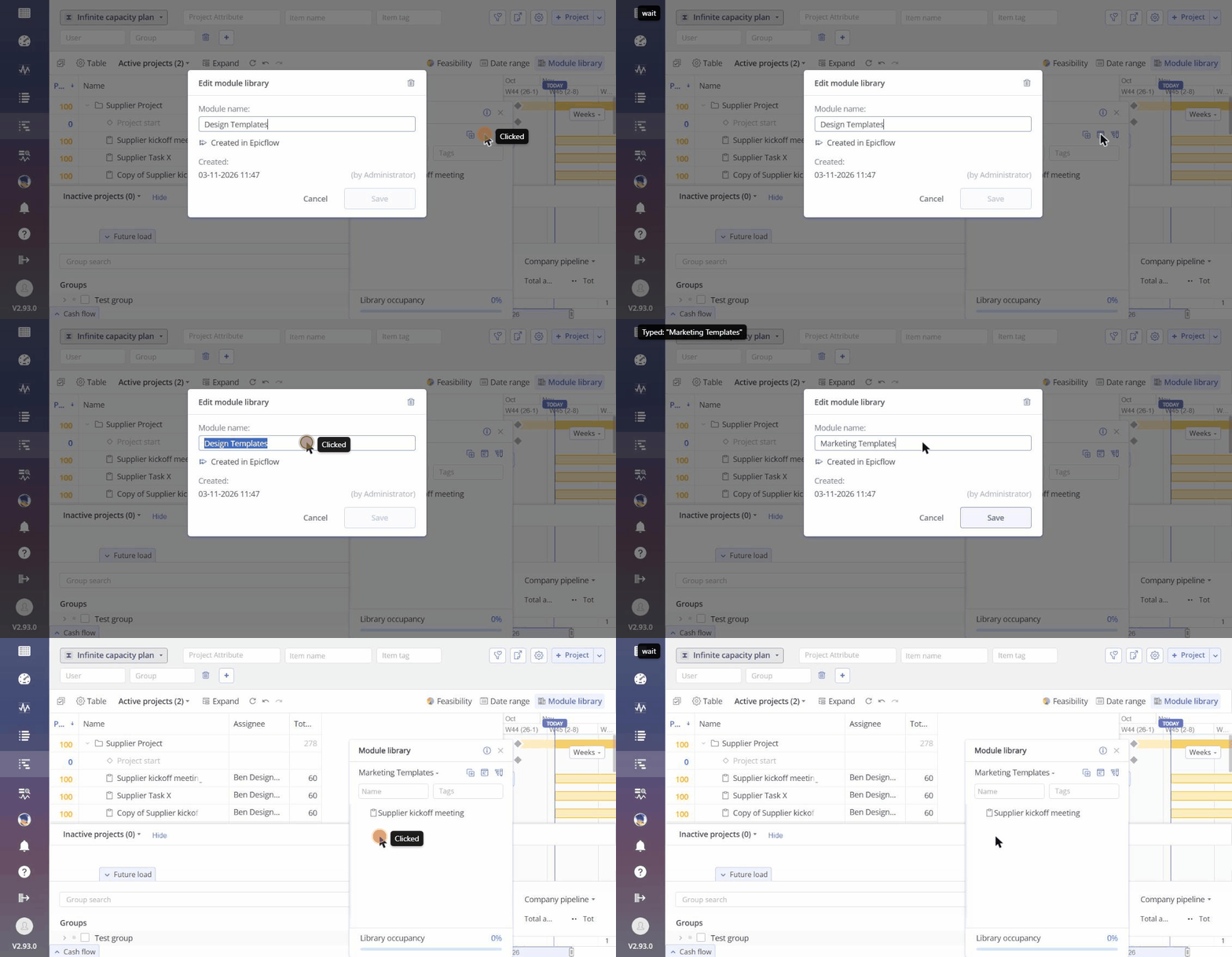
Screen #4 – Renaming a library
Deleting a library
- Select the library.
- Click the Edit icon to the right of the library name.
- Click the Trash icon in the top right corner of the Edit module library window.
- Click Yes to confirm (Screen #5).
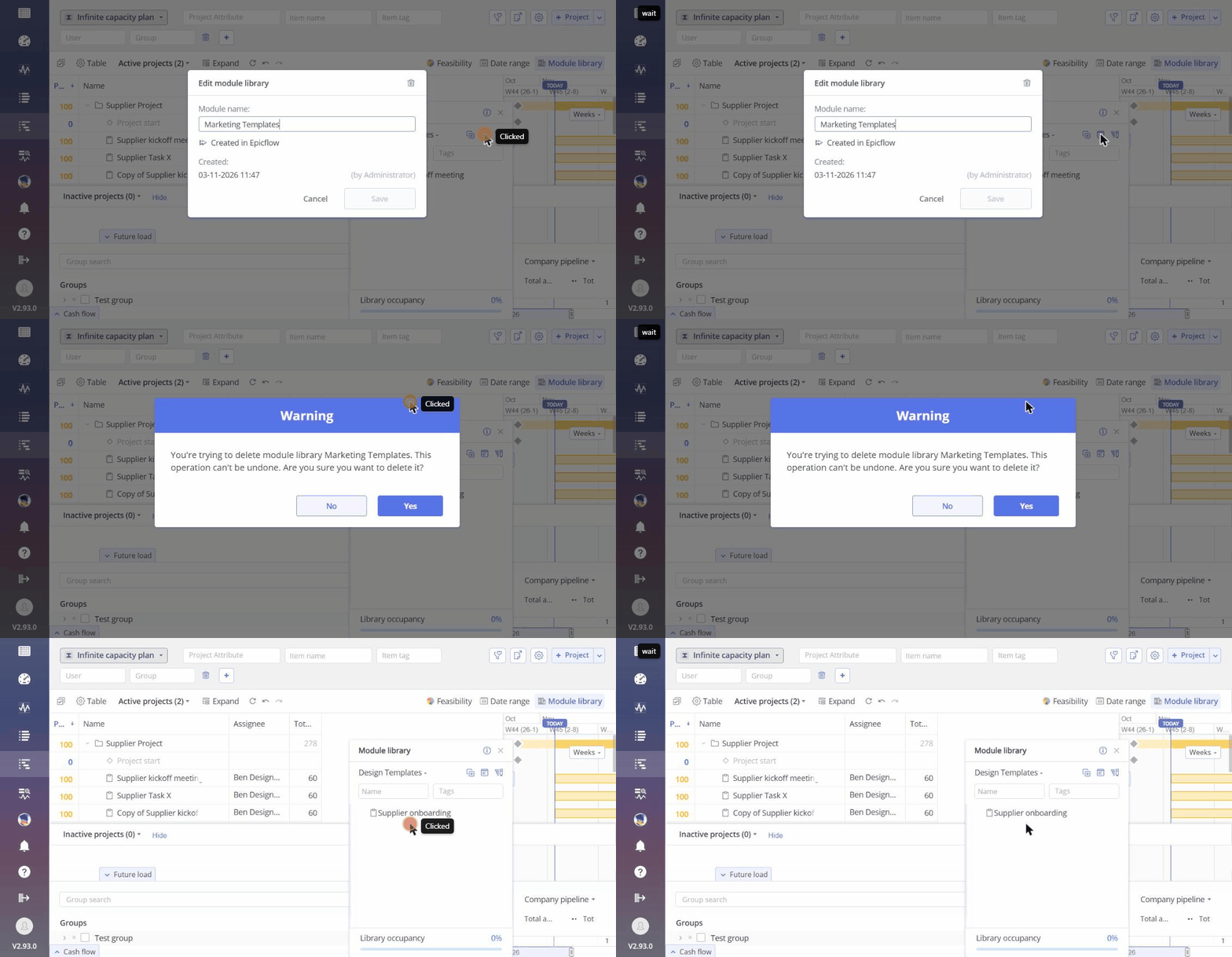
Screen #5 – Deleting a library
Adding Items to a Library
You can add tasks and summaries to a library. A summary is added together with everything inside it. Projects and milestones can’t be added.
- On the Pipeline page, expand the project and find the task or summary.
- Hover over its row and click the … icon.
- Select Add to module library.
- In the window that opens, select which task data to save with the module:
- Assigned resources, Tags, Competences, Description, Attributes, Budget distribution and Constraint dates are selected by default;
- Reset hours to baseline values is not selected by default.
- In the Module library field, select the library to add the item to.
- Click Add (Screen #6).
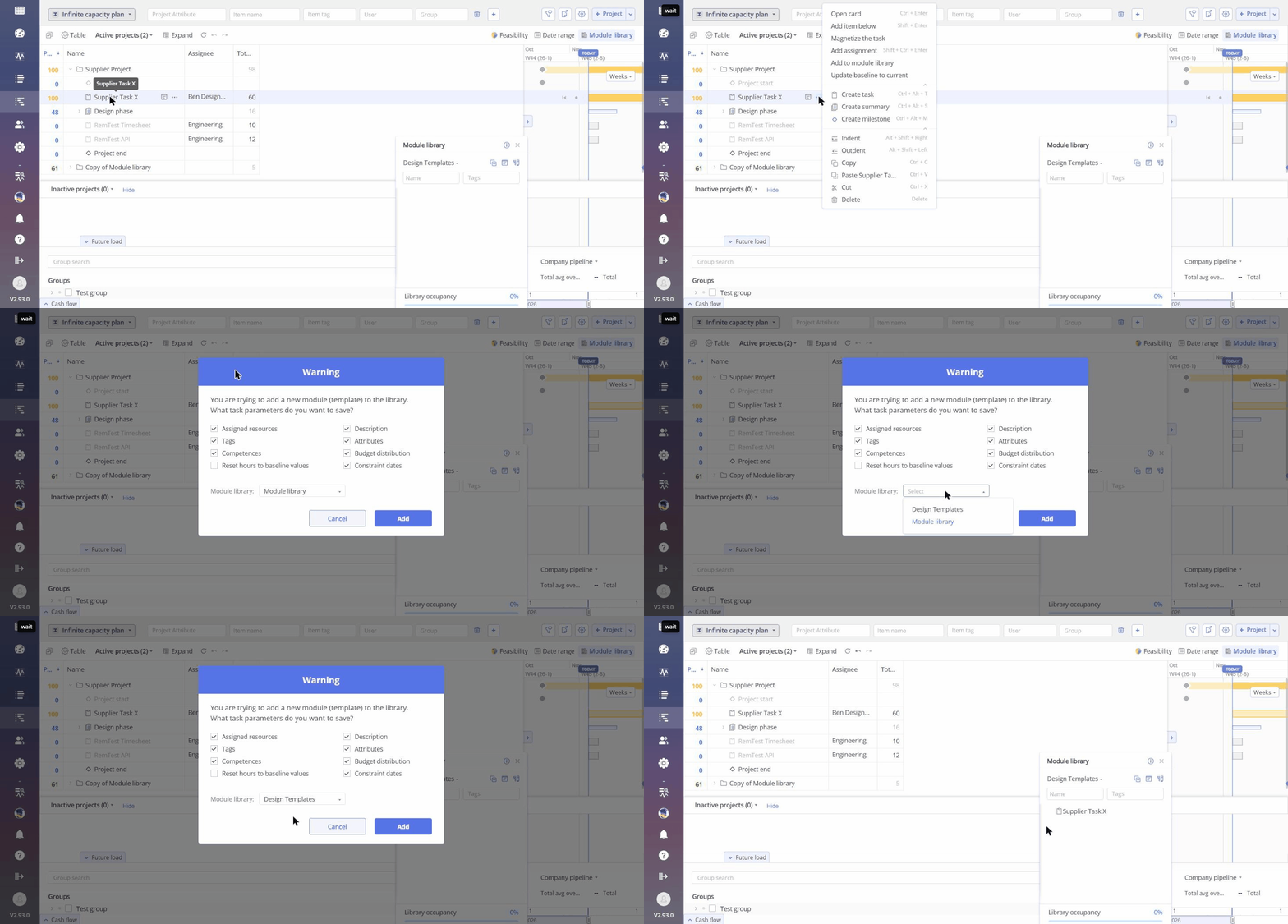
Screen #6 – Adding a task to a library
Finding Items in a Library
Use the fields at the top of the panel:
- Name – type any part of the item’s name. The search also finds tasks inside summaries and shows them under their summary (Screen #7). To clear the search, click the icon on the right of the field.
- Tags – select a tag to show only the items that have it.
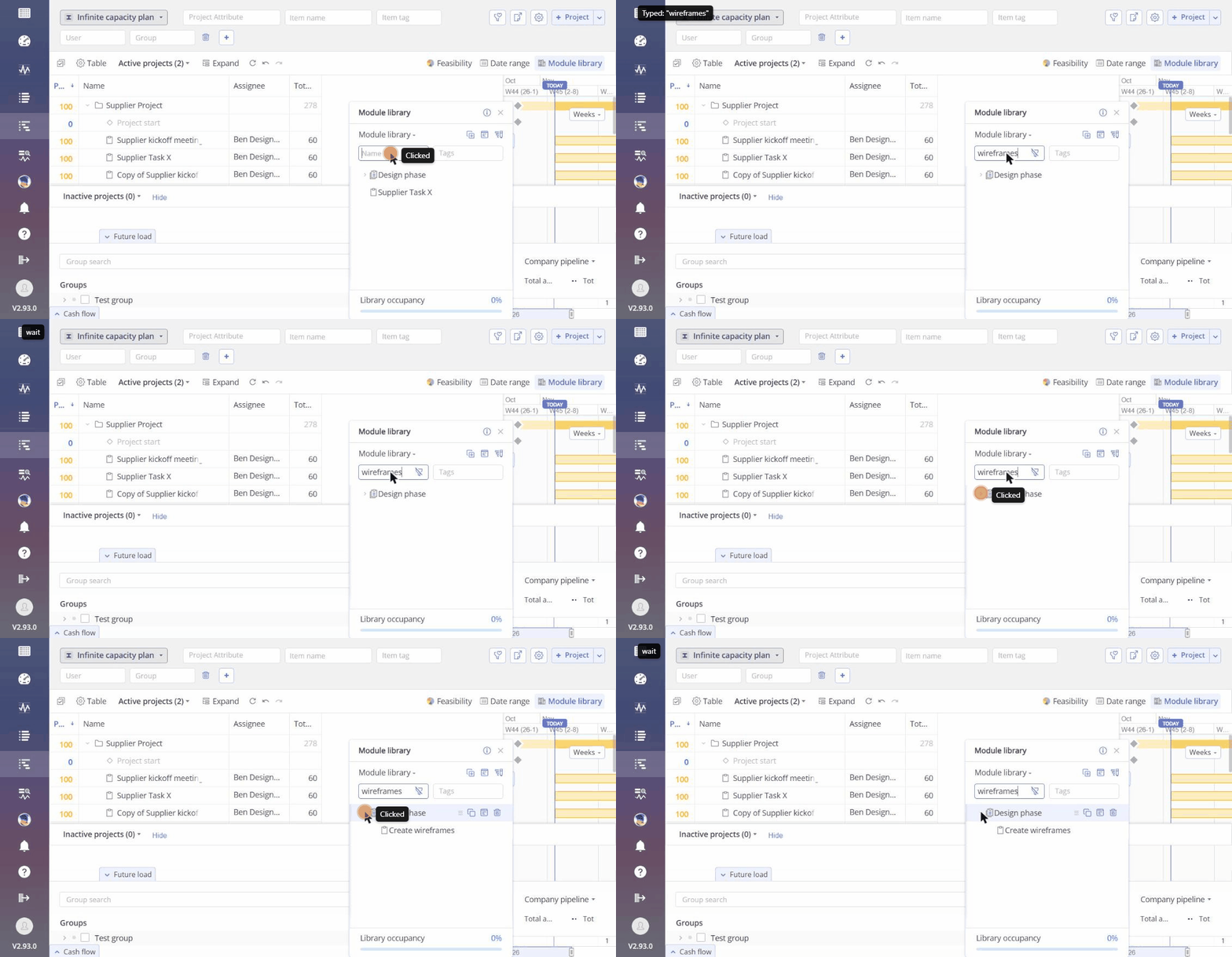
Screen #7 – Searching a library by name
Editing and Deleting Items
When you hover over an item in the panel, four icons appear on its right: Drag, Copy, Edit and Delete.
Editing an item
- Hover over the item and click the Edit icon.
- The item’s card opens. Change the name or any other details you need.
- Click Save (Screen #8).
Changes apply only to the item in the library. Tasks already added to projects from it stay as they are.
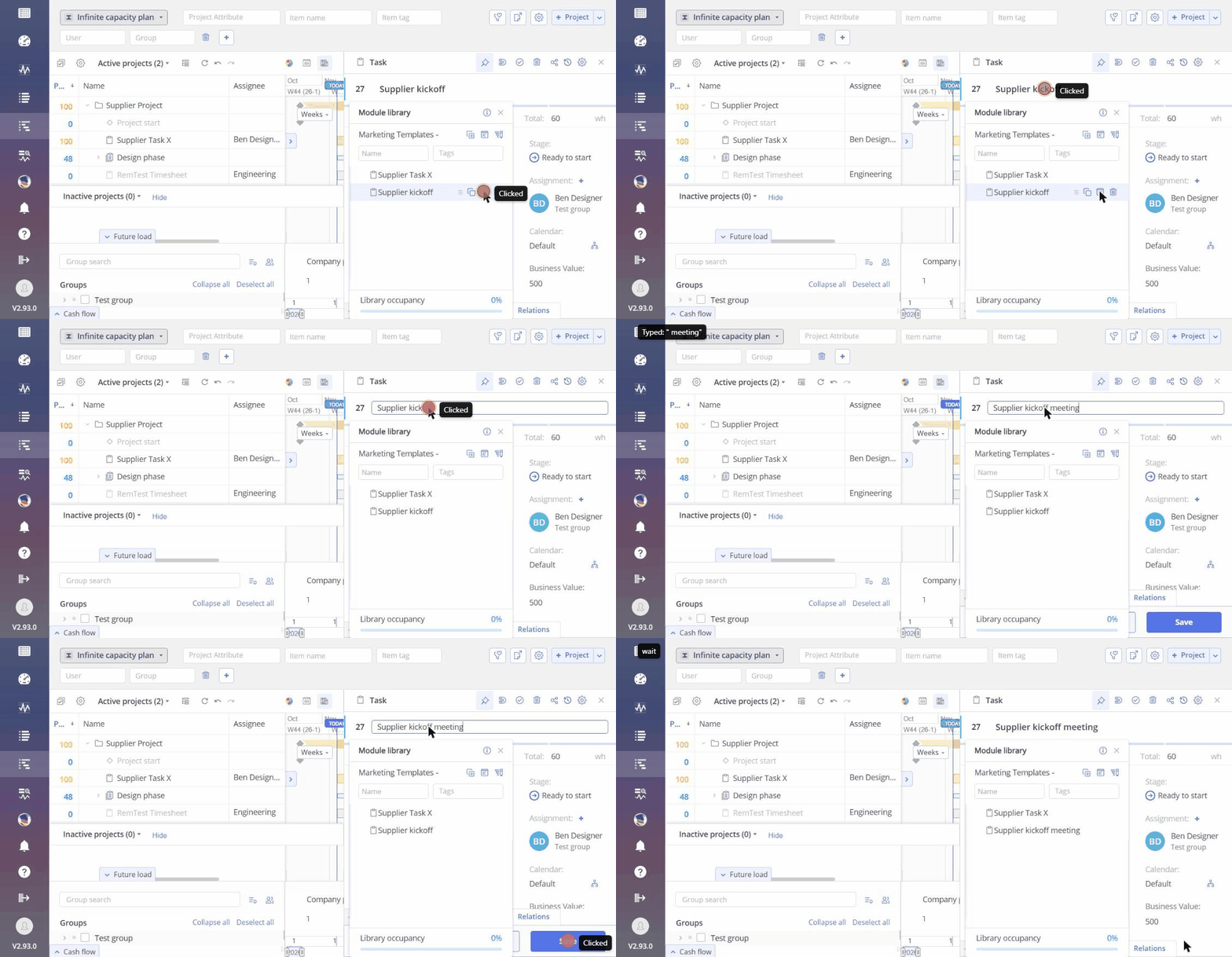
Screen #8 – Editing a library item
Deleting an item
- Hover over the item and click the Delete icon.
- Click Yes to confirm (Screen #9).
The item is deleted from the library permanently. Tasks already added to projects from it are not affected.
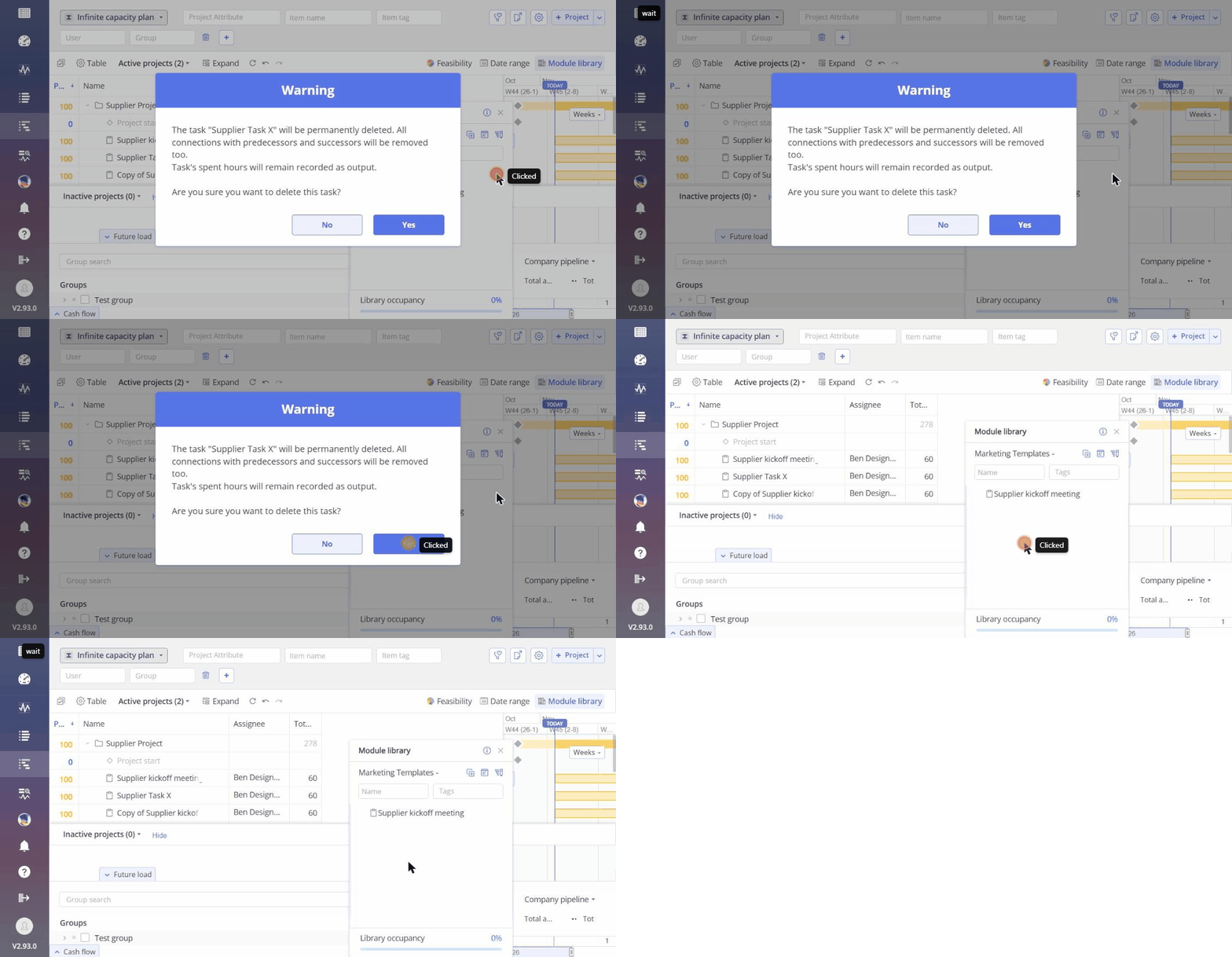
Screen #9 – Deleting a library item
Adding Library Items to a Project
There are two ways to add an item from the library to a project. Either way, the item is copied with all the data that was saved in the module (for example, its assignees and hours). If the project already has an item with the same name, the copy gets the “Copy of” prefix.
Drag and drop
- On the Pipeline page, expand the project.
- Drag the item from the library panel onto a row of the project (Screen #10).
- The item is added above that row, and its card opens so you can check the details.
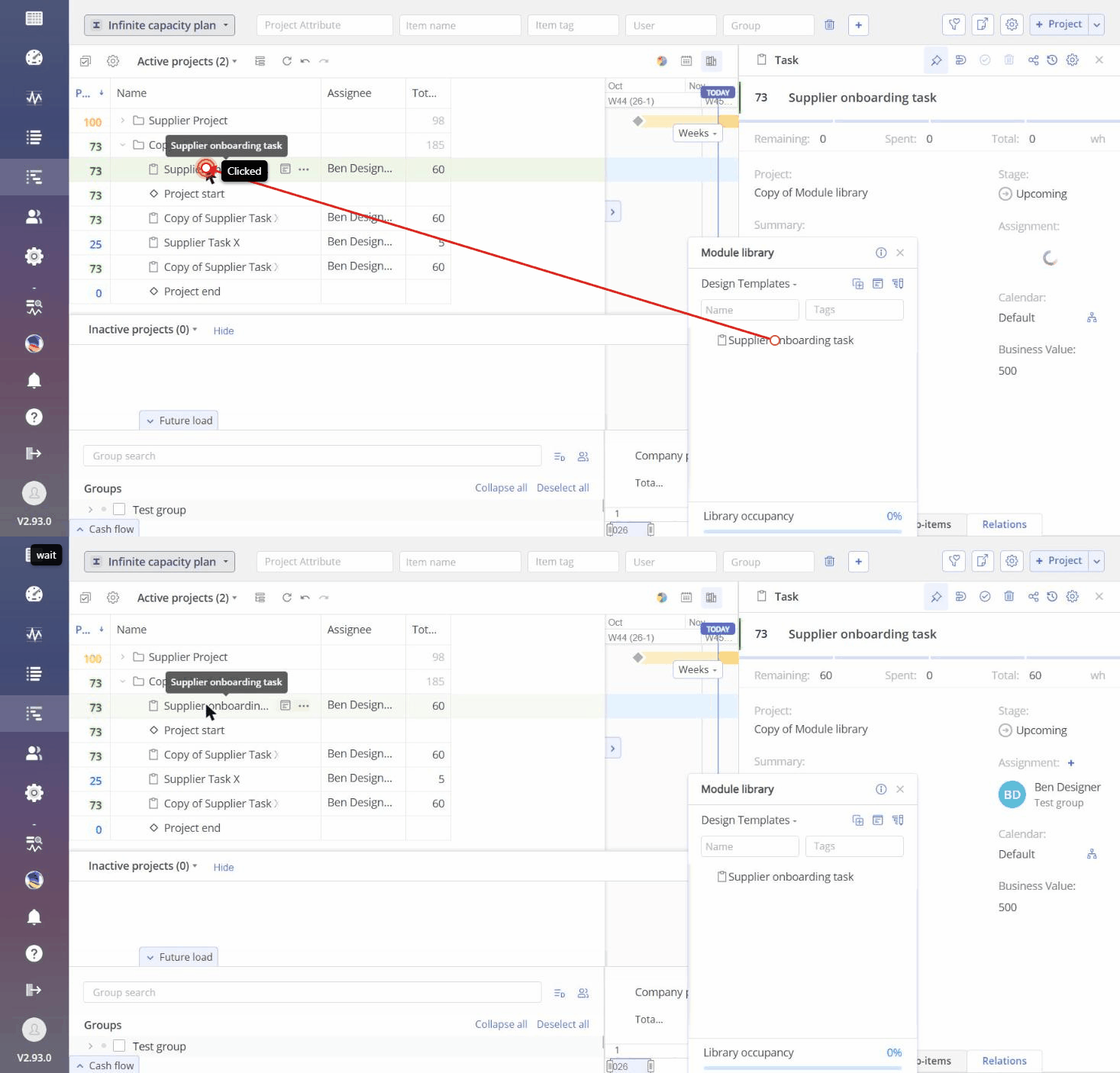
Screen #10 – Dragging an item into a project
Copy and paste
- Hover over the item in the library and click the Copy icon. A message confirms that the item was copied.
- In the project, hover over the row after which you want to add the item and click the … icon.
- Select Paste (Screen #11). The item is added below that row. If the row is the project’s end milestone, the item is added above it.
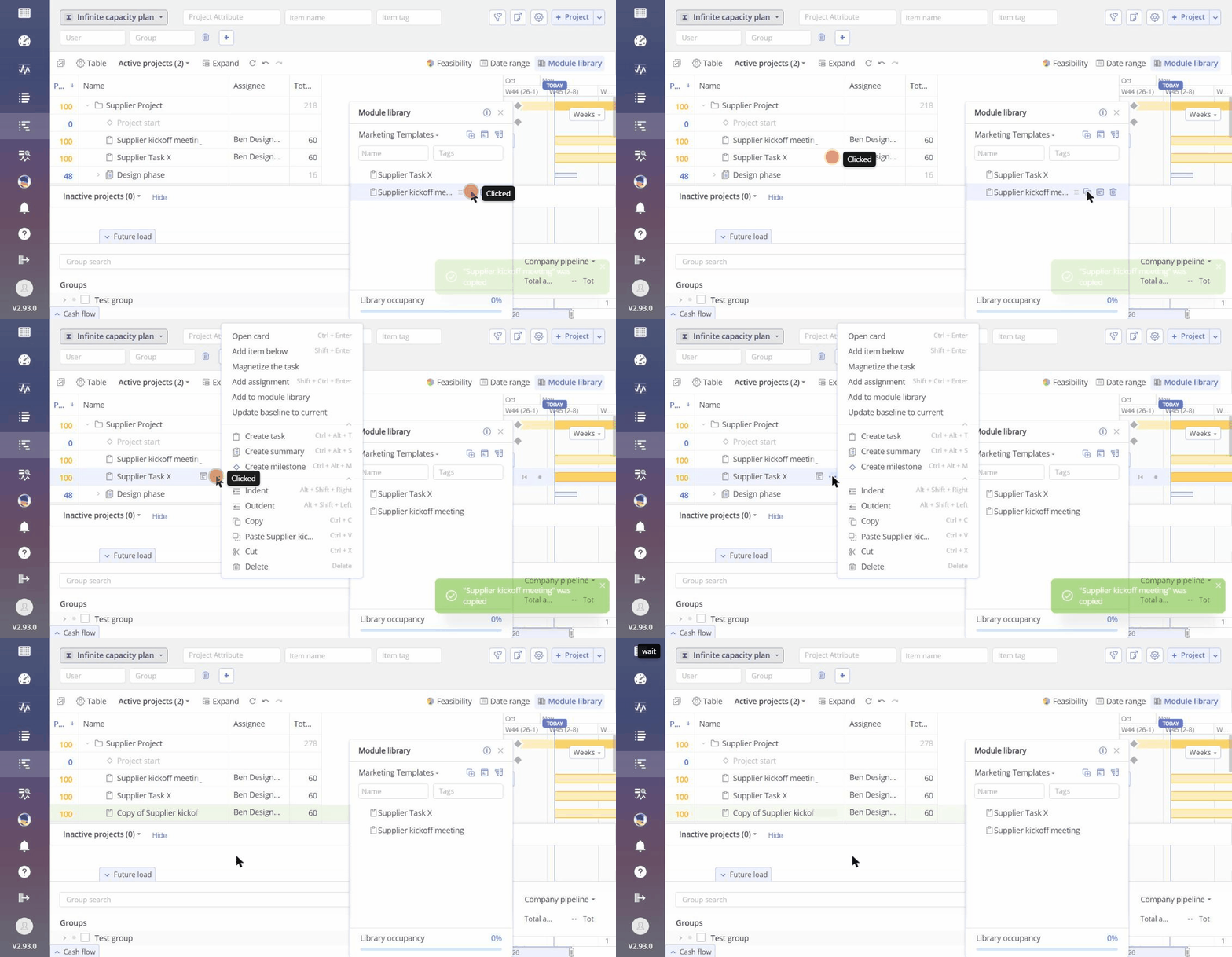
Screen #11 – Copying an item and pasting it into a project
Creating a Project from a Library
You can turn a whole library into a new project. The library itself stays unchanged.
- Select the library in the panel.
- Click the Create this project in Inactive projects icon (the first icon to the right of the library name).
- Under Task assignments, select one option:
- Keep assigned resources (default) – tasks keep the people and groups assigned in the library;
- Reassign tasks to their resource groups – tasks are assigned to the resource groups instead.
- Under Additional data to copy, clear the options you don’t need. Tags, Competences, Description, Attributes, Budget distribution, Constraint dates and Financial info are selected by default.
- Under Hours, leave Reset hours to baseline values selected (default) or clear it.
- If needed, select a Project group (optional).
- To open the new project right away, select Open project after creation.
- Click Create in Inactive projects (Screen #12).
The new project appears in Inactive projects with the name “Copy of” + the library name. You can rename it and move it to active projects when it’s ready.
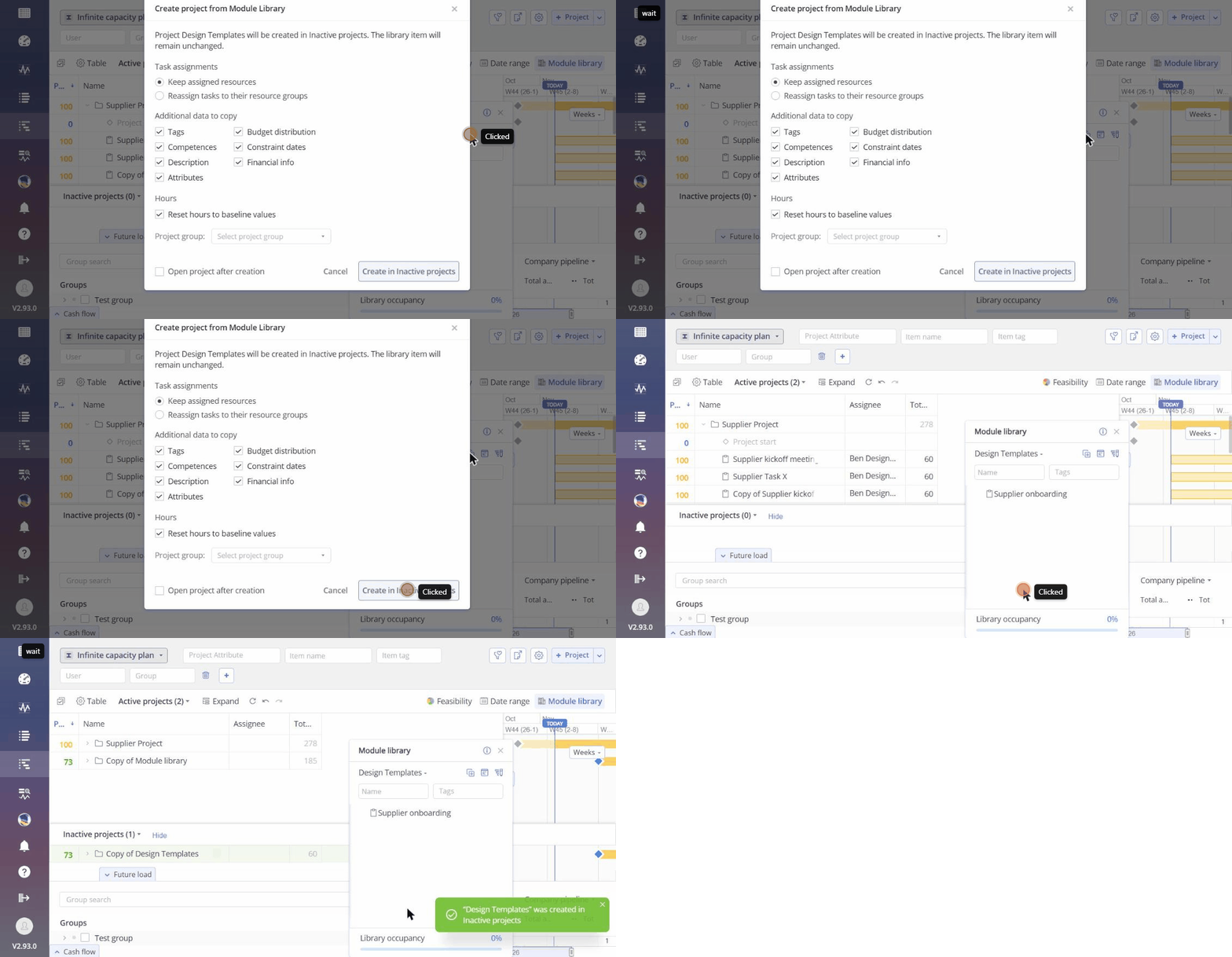
Screen #12 – Creating a project from a library
Editing a Library in Quick Edit Mode
To edit many items at once, open the library in Quick Edit Mode:
- Select the library in the panel.
- Click the Quick Edit Mode icon (the third icon to the right of the library name).
- The library opens as a table (Screen #13). Here you can change items directly in the table or add new ones with + New.
- To return to the Pipeline, click Back.
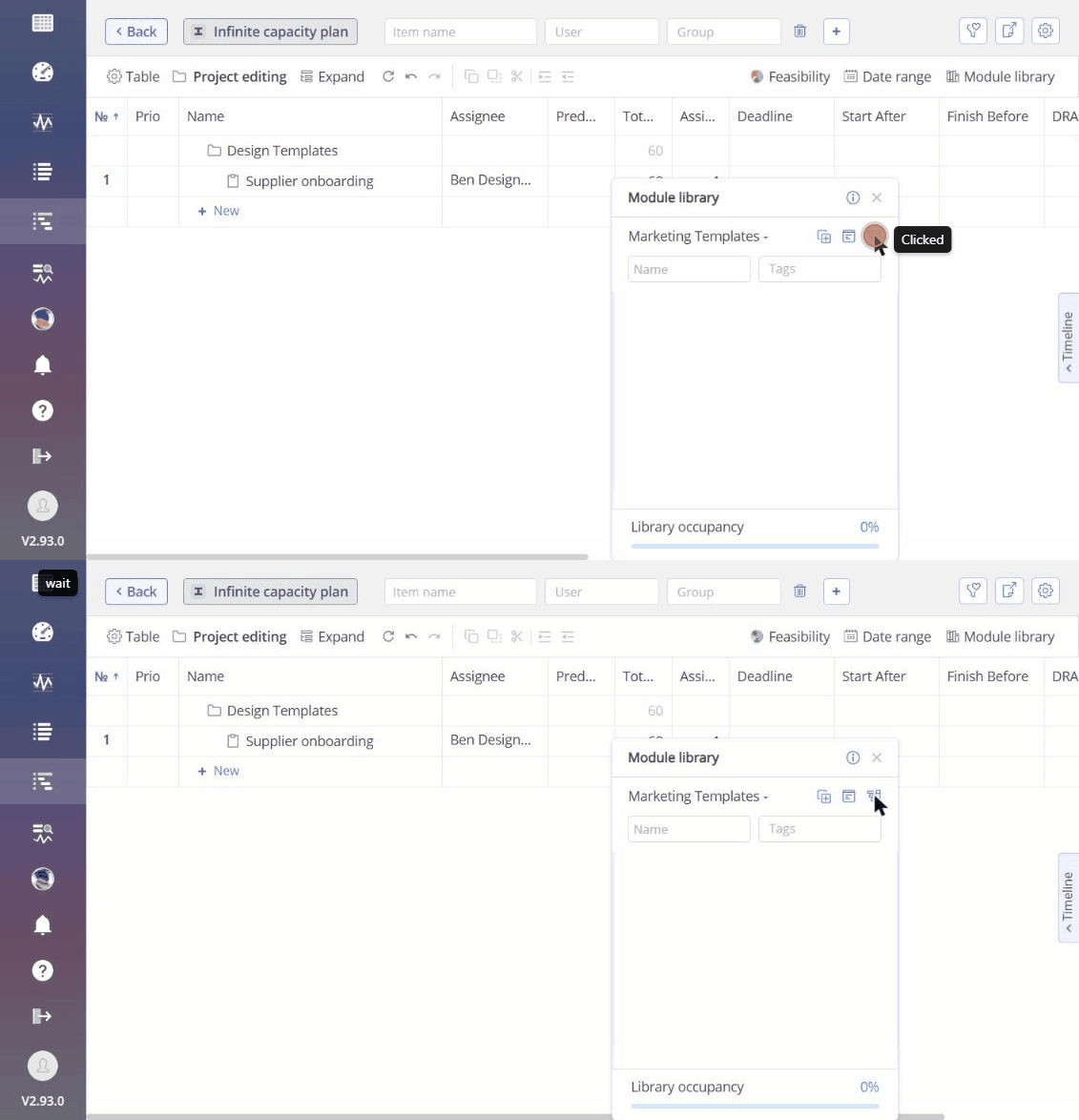
Screen #13 – A library in Quick Edit Mode
If you have any questions, please contact us at support@epicflow.com.